Thursday, 31 December 2020

Ten Things About 2020: My 'Keep', 'Discard' and 'Maybe' Piles from the Year of the Pandemic


Back in the days before we had heard of something called COVID 19, Tuesdays and Thursdays were ballet class days for my little girl. Wednesdays and Fridays, the elder one went to Karate. Saturdays both attended an art class. Sundays were our hangout days - a trip to the park, pastries at our favourite cafe or a movie. Our days were carefully apportioned into school time, activities time and fun time. Every day when I picked them up after school, I would ask 'so how was school today?' and they would mechanically reply, 'it was ok.' Sometimes (rarely), they would talk about something that excited them or disappointed them that day. And then, suddenly, in the unique landscape that was 2020, time lay before us like an infinite stretch of untamed, unfenced grassland. There was no trodden path to follow and no markers pointing out the way. So we simply walked, hand in hand. And I heard stories about school I had never heard before: about arguments with friends; the time one got picked on by a class bully and the time an unexpected person did something nice for the other. I heard about little crushes and insecurities. And all this without my ever having to ask, 'so what was school like, today?'


2020 was the kind of year no one could have imagined. And yet we lived through it, adapted to it, worked our way around it as best as we could. It proved once again that nothing can quite extinguish the longing of the human spirit to find joy in existence and to find a path forward however difficult it may look. There are things that fell into place so naturally that I would love for them to continue to be part of our lives. And then there are things I would be glad to see the back of, forever! There are also a few that I can't make up my mind about, stuff that looked attractive in parts but sticks out as a whole. Out of the top 10 things that defined 2020 for me, personally. here is my categorisation of what I would want to continue, what I definitely don't wish to see again and what I am unsure about.


Keep


  1. School @ home: At least 3 months out of the academic year is monsoon season in Kerala. In a normal school year, anything from 3 to 10 working days are declared holidays on account of rain. On many other days, I have watched with anxiety as the skies burst open or the winds raged just about the time the kids would be on the bus back home. With the experience of this past year, why not think of having online sessions instead of classroom learning during the worst of the monsoon season? Pin it down to separation anxiety but I think I really would enjoy having the kids around a bit more when life gets back to 'normal.'
  2. The new normal in our eating habits: For want of help and anxiety about the availability of resources, one of the first steps we took to adapt to the lockdown was to let go of elaborate meals. Whatever was on the table, everyone would eat. No more individual breakfasts and fastidiousness at lunch. This was also a time I got the opportunity to lay down the law when it came to kids and veggies. They have a new-found discipline when it comes to food and a better appreciation for the effort that goes into making it. This is something I definitely intend to take forward.
  3. Books becoming more central to our days: The one thing I am happiest about is to see the kids voraciously go through their books. With limited avenues to spend their time and energies on, they spent more and more time reading. My 7-year-old is almost up to the 11-year-old's level when it comes to reading because of the sheer amount of time they had in hand. The quality of their reading has also vastly improved as they started digging deeper into our bookshelves when they ran out of unread ones on their own. Definitely a keeper.
  4. Sharing household responsibilities: When my little one learned to fold a towel in kindergarten, I was impressed but never thought it would come in handy any time soon. Now my kids systematically fold their own clothes and put them away in their cupboard without help or supervision. In a normal school year, it would not even have occurred to me to ask them to do chores around the house. This year demonstrated just how much we underestimate children and how much more efficiently things work when we act as a team. I was also able to explain to them why it was never 'helping' around the house but 'doing your bit', now and always.
  5. Talking the talk: In 2020, I realised that quality time is what happens when you are not actively plotting for it to happen. With deadlines losing all meaning and no one in a hurry to be anywhere, we found ourselves sitting around talking a lot more than before. My children understood for the first time that I had a life before them - they know where I went to college and that before I was their mother, I had a childhood home with pets and audio cassettes and fights with my siblings. I heard from my mother about things that broke her heart as a child - her childhood friend who did not have anything to eat at lunch and her disgust at a teacher who openly leered at one of her classmates. Time brought out the storyteller in us all. We grew into attentive listeners and respectful audiences. And I don't wish to see that come to a stop.

PC: Tobias Baumgaertner on Instagram. One of the defining images of 2020, depicting compassion and companionship in two widowed penguins sharing a moment of solidarity and comfort. Definitely a 'keepsake' of the year


Discard

  1. The reluctance to have human interactions: In pre-pandemic days, Zomato was strictly an occasional convenience. With the lockdown, delivery apps and online grocery options got me into the habit of avoiding human contact, whenever I could. How great it was not to have to explain what you need or stand in a queue with an overflowing shopping cart! Even once the restrictions were lifted I found myself reluctant to step out into the real world. The highly sanitised, impersonal and increasingly virtual world of 2020 was easy to get used to but I intend to work this out of my system in 2021. I want to get used again to faces and tones of voice - friendly and morose, helpful and grating - human life in all its variety.
  2. The obsession with cooking in general and cooking bigger and better in particular: I don't know of any kid above 4 who made it through the lockdown without baking their first cake. My own little girl, a complete kitchen novice who was scared to be anywhere near the gas stove has learned to make pancakes, french toast, cakes and even a somewhat passable pizza. I want it to stop! She is 11. I would rather she scatter her toys on the floor and drive me mad like she used to. When I go online, I find so much discussion about food that it is disconcerting. My idlis were perfectly okay before someone taught me how to add two additional hours of effort to make them "super soft." I think we will manage just fine the old way.
  3. Children and social media: My children would not have been anywhere near my phone or laptop at their present age, if not for the necessities of this period. Without school and birthday parties and playdates, of course, they learned the basics of navigating social media. I hate that they have started wondering if they are behind the times for not changing their classroom profile pics every week and why they haven't been allowed to create 'online avatars.' Once this is all over, they go right back to being cave-people when it comes to gadgets and social media. 

PC: Google Images. One of the defining images of the year that symbolised fear and anxiety (though also resilience and dedication.) I would not be sad to see this one disappear from our collective memory. 

Maybe

  1. Less is Fine: I was six months into a weight loss regimen where I had sworn off new clothes till I reached my ideal weight when the lockdown struck. So that means I went over a year without shopping for clothes for myself and 9 months without buying anything new for the kids. Did it affect the quality of our lives? No. Did it affect our happiness? No. But am I ready to give up the high of the occasional shopping binge? I am not entirely sure. I am aware the planet is crying out for us to use less and spend less. I am also aware of how much my debit card would have thanked me during this time. I am not entirely sure I have the willpower to stick with this course but...I am seriously wondering if a 'slow down' is not warranted in the light of all that came to pass in 2020.
  2. Virtual bonding: With everyone feeling lonely, cut off and isolated in their own little islands of fear, there was so much more of an effort to reach out and reconnect this year. I even had a phone conversation with an old batchmate where I spent half the time thinking she was someone else and the other half making up for the mistake. In 2020, we reached out like never before. We saw each other's homes on our screens, defenses lowered, vulnerabilities exposed, and we were fine with that. Will that continue to be so in post-pandemic life? I doubt it. I doubt we will any more have the inclination to go soul-searching with someone we haven't thought about since grade 3. But would I like it to continue? Sure! At least with those with whom we have already made some progress. Those whose presence brought some additional element of warmth in our lives.
PC: https://www.biocycle.net/food-waste-reduction-strategies-k-12-schools/
Definitely on the wish list for the coming year is to cut out excesses in life - whether it be food, clothes, or even emotion. Can I? Can we? 


It is a new calendar year but we don't know yet how much is going to change effectively. There is a good chance at least the first half of 2021 will be an extension of the past 9 months. That is ok, we are prepared as best as we can be. Now what we need are some tools to readjust to old realities, or maybe build ourselves a whole new reality altogether. One that has more light and air in it, more talks and laughter, more time spent together without planning to spend time together. I guess that was what 'quality time' really was about all along.

Sunday, 26 July 2020

Life, love and death. On my balcony.


Goldie died, Friday morning. The bright green-and-yellow lovebird had come into our lives a year ago, along with Aqua, a blue-and-white beauty - a gift for my children from their grand aunt. We had up until then enforced a no-pets rule in the house that the children had found utterly unfair. I would point at the heaps of toys scattered all over the house, the mess of craft projects and their untidy study tables and tell them I already had too much on my plate to handle another living creature in our cluttered life. On a visit to my Uncle and Aunt's, the kids had been fascinated by their cages full of chirping lovebirds and pigeons and my Aunt promised to give them a pair, later, when she came to visit us sometime. I mentally thanked her for diplomatically handling the situation without disappointing the kids. Little did I know that months later, when my cousins were home on their annual visit from abroad, she would send over a pair, as promised. I could not bring myself to turn the gift down. And thus we found ourselves, pet owners. 

Aqua and Goldie, our original pair. with their new-found yellow mates in the initial days

Love, action, drama

It was my friend Mekha's Dad who first pointed out that the pair were not a couple - they were both the same sex. I shrugged and did not think too much of it - until he showed up the next day with a pair of bright yellow lovebirds for Aqua and Goldie to pair up with. It is not healthy for them not to have mates, he said. They might end up fighting and killing each other for no reason. And thus our bird family grew. The girls, at the time besotted with their Dad's latest movie, named the newcomers Kochunni and Pakki. In a few weeks, Kochunni had paired off with the blue Aqua and Pakki with the green Goldie.

The girls were dedicated to the cause of 'domesticating' them. They would spend hours talking to them, reading to them, singing to them. Now lovebirds are not the best pet material if you are looking for moments like them cuddling up to you or showing affection or even allowing themselves to be touched or petted. The most we got out of them was that they would huddle towards the feeding bowl when they saw any of us, whether they were already fed or not. Over a period of time, the kids started losing interest in these not-too-friendly pets. And then one day magic happened. 

In one of the earthen pots we had put up for their nests was a bright, shiny little egg! The entire house - including my mother who is famously averse to animals of any sort - was filled with a kind of eagerness and curiosity. There is just something about new life - in any form - that makes you feel hopeful and optimistic about everything. 20 days later, there he was - a tiny, pink blob of flesh that looked like it may be crushed if we so much as looked too hard at it! Our first bird baby - what else could we name him but 'Chicky?!  That soon metamorphosed into Chickadoo. We were besotted by him and mesmerized with the marvels unfolding before our eyes every day - the first crop of downy white appearing on the pink skin, which soon deepened into a pale green as he grew bigger and stronger with each passing day. 

Our first baby, Chickadoo, the day he was born.
(you may need to look real hard to spot him)
Pakki and Goldie in Exile

Did I mention that it was Kochunni and Aqua who were the proud parents of our little Chickadoo? It was only when Kochunni, named after the legendary thief of Kayamkulam, laid an egg that we realised we had got their genders mixed up in the beginning! Not that it made any difference to their bird lives but to us, humans, the names were too entrenched in our minds to change them now! The reason why this clarification is important is because Pakki, the other female, smaller and more fierce, one day decided that little Chickadoo was an unnecessary addition to the group. She sneaked into the pot and pecked him hard on his little neck. There was panic and fear in the household when we realised our baby bird was badly hurt. We untied Chickadoo's earthen nest and carried him, pot and all, to the Pet Hospital nearby. The vet carefully cleaned out his wounds and told us he would make it but the aggressive female needed to be removed from the cage. 

It was time for Pakki's banishment. We decided it would be too harsh to put her in exile all by herself, so we also transferred her mate, Goldie, along with her to a smaller cage we had. Now I should tell you a little bit about Goldie. To me, he seemed like the bird equivalent of Sanjeev Kumar from the old Hindi movies - the kind who would look on with immeasurable affection even as his wife did something crazy. Now the hero and his petulant girlfriend found themselves cut off from the habitat they were used to, although the cages were placed side by side. As Chickadoo healed in peace under our loving, tender care, Pakki and Goldie glowered from their little holding cell. 

Taking care of little Chickadoo gave us a little bit of that 'cuddly pet' feeling we had missed with the birds so far. We stroked his little head as we put drops in his mouth through a filler and watched with pride as he stepped out of his little pot-nest one fine day, all on his own! I think the girls and I were far more proud than Aqua and Kochunni that day! We were in fact a little peeved with the pair of them for not doing enough to protect their chick from his jealous aunt's attacks (yup, we had a whole Disney movie going on in our collective imagination.) Things were going pretty ok, until the next unexpected twist. Pakki laid an egg. 

Pakki and Goldie Return

There were no nesting pots in the little cage. We had not given that much thought to Pakki and Goldie's needs when we moved them out of the larger cage - after all, they were in disgrace. But there was the egg, rolling slowly on the floor of the bare cage and Goldie seemed to be looking at us with accusing eyes. Within the hour, the egg was carefully shifted to Pakki's old pot and the pair of jailbirds (don't you love a good pun when it springs at you? I do!) were put back in with their former roommates. Pakki went berserk for a short while, flying around aggressively screeching and apparently trying to terrorise Aqua and Kochunni out of their lives. But for some reason, she stayed resolutely away from Chickadoo this time. He was now quite capable of looking after himself too. She laid claim to both pots, not allowing Kochunni near either of them. But she could not keep this up for long. After some venting in this fashion, she finally decided on one and settled into it. It was the empty one. 

Pakki had turned her back on the egg she laid in exile. Thankfully for that little egg, Kochunni laid an egg herself in the next couple of days. She unintentionally started incubating her rival's egg too. Pakki herself went on to lay three more eggs in that batch. As fate would have it, the only egg that successfully hatched in Kochunni's pot this time was the rogue, discarded egg. Out came little Mimi, all pretty and blue and Kochunni seemed none too wiser to her origins. She and Aqua doted on her just like they had little Chickadoo.

Meanwhile, Goldie was showering Pakki with care and affection as she patiently incubated her own brood. Soon, we had beautiful little Lily and clownish-looking Bobo join the pack. Pakki and Goldie tended to their babies like perfect parents and this time there was no pecking or attacking. The three new chicks seemed to bond and it was the cutest sight to see them huddled up together. Only poor Chickadoo, lonesome survivor of his batch, continued to be lonely.


Our new babies huddling together. The yellow flecked with a little green
in the center is Lily, the beauty. Trying to join in the huddle is Chickadoo. 


Death makes its first uninvited stop

One morning, for no apparent reason, little Lily stopped breathing. She had been the prettiest in the cage - vivid yellow with just a dash of green thrown in. She was my favourite, the one I had sworn not to give away when the time came. The kids and I had agreed that we would not keep more than six birds at a time. We would keep Chickadoo and Lily. Mimi and Bobo would go to another home. There was never any question of giving away our original four - Kochunni and Aqua; Pakki and Goldie. And then Lily died. Just like that. For no reason. 

Our hearts were broken that day. All of us kept looking into the cage as if Lily was just going to pop out of one of the pots again, like we had seen her do all these days. But Lily had already taken flight. Out of our home and hearts and into an unknown dimension. Our first loss.

I told the kids angrily that this was one of the main reasons I had not wanted pets in the first place. They die. They steal your affections and then die. Leaving little knots in your throat when they should have been happily flitting around in their cage.

The kids were truly shaken by Lily's loss too. It took them a while to start reading and singing to the birds again. I hoped the birds would not get into another breeding season any time soon. I was done with all that excitement. I wanted less of them in the cage and in our lives. 

Life Goes On

Kochunni was the first to start laying again. But for some reason, she decided she was not ready for another round of babies. She methodically threw each egg she laid out of the pot. I have no idea what brought on that behavior. Had she known all along that the last baby she raised was not really hers? (More likely, she was suffering from calcium deficiency, Mekha's Dad said. But we humans will always look for human explanations to everything around us.) 

Birds really do seem to have a mind of their own. Kochunni did not want babies right now. And out went 4 shiny eggs. My daughters were angry with her. I told them it was her body, her life, her decision. Also, that they should not attribute human thoughts and emotions to the actions of animals. (though that is exactly what I had been doing, within my own mind.)

Then Pakki started laying too. She is incubating her latest clutch as I write this. We don't know which of those will hatch and which of the hatchlings will survive. What we do know is that this time around, Pakki is on her own. Goldie left to join his little girl, two days ago. Just like in Lily's case, we don't really know why. 

Goldie's last morning

Friday morning, before the girls settled into their online classes, I opened the door to the balcony where the birdcage is. We, the girls and I, had an impromptu session of chatting up the birds. They came towards the feeding bowls as they usually do when they see us. Goldie was clutching at the cage bars as he usually does. I put a finger in and touched his soft tummy. He did not threaten me with his beak or even flit away as usual. 'What's up with Goldie today? He seems friendly,' I told the girls. They tested out my hypothesis by also reaching in with their fingers in and stroking the bright green feathers. He let himself be stroked - it was most un-Goldie of him! Then it was time for their classes and we moved on to our day.

A little while later we noticed him sitting on the floor of the cage - very uncharacteristic of him and our first warning signal. Our hearts sank a little when we saw him sitting there, breathing heavily, feathers puffed, quite immobile. We knew then that he was sick, quite sick. Pakki came out of the pot a couple of times, leaving her precious eggs alone for a few moments at a time to sit by her mate. She pecked him gently on the head and nudged him with her beak as he sat there, painfully melting away before our eyes. Then she went back into her pot for the final time. Before online sessions were over for the day, Goldie had keeled over to the side, silent and motionless. Pakki did not come out of the pot thereafter.

We bid a tearful goodbye to our little friend of the past year, our stoic Sanjeev Kumar bird, wondering what Pakki would do now; whether she would miss her partner when the babies were born. I reminded myself to not attribute human thoughts and emotions to the birds but I cannot help feeling a pang in my heart every time I see the little yellow head peering out of the pot. I can see the other birds take food to her - they seem to understand she needs them now. Maybe in time one of them will fill in for Goldie. 

The girls were told by their father that Goldie was having a party with Lily right now - how they must have missed each other! They seemed to find joy in that thought. I think I might too. 

Whenever anyone asked my opinion about having pets, I have always discouraged them. I would tell them about having to clean up poop and wash smelly bowls. About disgusting messes and unwanted responsibility. I think I should start telling them about life in its infinite variety and immense drama unfolding before our eyes. About children learning how to be responsible for something other than themselves. And how they learn to deal with life. And death. And love. Even if it breaks their little hearts every now and then.

My devoted little girl reading to her birds


PS: We still have all the birds that survived, chicks and all. The idea was that we would give them away when they got to be too much for us. That day isn't here, just yet. 

Sunday, 17 May 2020

Masks Off!

I got an invite the other day to be part of one of those videos family and friends groups are making these days to have a bit of fun and togetherness in the lockdown period. I have seen several of those on Facebook. Some of them looked really nice and I complimented the makers and hit like on their creativity and camaraderie. But I turned down the invite. I have been accused of many things over the years but I don't think being 'fun' was ever part of them - not in the recent past anyway!

"When did you get so shy?' I was asked. "We still remember you dancing on stage in college." Yup. I have done that. Danced to 'Rangeela' on stage. I have even participated in a couple of beauty pageants. You heard that right! This was before everyone and their grand aunt knew exactly how tall and how wide you needed to be to get a foot in the door of those. What can I say? I went to college in less complicated times! (And I can't be thankful enough for the lack of phone cameras back then!) And I had a lot more...what do you call it...confidence? Courage? What really is an apt translation for that bang-on-the-nail Malayalam word "tholikkatti"? Just calling it "thicker skin" doesn't seem to capture the spirit of it! Maybe my 'fun' quotient just got exhausted with all that constant effort to be in the centre of everything! Or maybe it had something to do with the vicious event of ragging that happened when I left the comfortable environs of CMS College - which was practically home! -  and my home town and landed up in Law College, Ernakulam. One that ended with me breaking down in the middle of the road surrounded by a group of male seniors who considered it their divine right and duty 'to bring me down a peg.' That was the first time I realized the inherent difference between 'the way you see yourself' and 'the way the world looks at you.' (as immortalised in many a meme these days*). I saw myself as cool and fun. They did not. It is an inevitable phase in growing up - the first hard knock that teaches you to take an objective look at yourself.

[*Scroll to the bottom for an example. Or just read on and you will get there 😀]

Three years later, the venue shifted to National Law School, Bangalore. For the first time I realised that I spoke English 'like a Malayali.' And dressed like one too. Apparently, this was nothing to be proud of. And that was confusing because I had taken pride in both, up to that point. If Law College gifted me a Bachelor's Degree in toning down, Law School handed me my Master's in blending in.

At my first job, I was told I looked like 'an aunty' because I still sported gold jewelry on an everyday basis. (This was back when I still believed I needed to wear my 'thali' on a chain to be a good wife and a couple of bangles to show myself to be a good daughter.) When I went through a phase, early in my marriage, of 'not wanting kids' I was incredulously informed by one of my colleagues that I did not '*look* like someone who could have that kind of an attitude.' This was brand new information to me - as a bindi-sporting, kurta-wearing, bangles-jangling kind of a person, I was expected to be conservative and docile or in any case, anything but radical! What a blow to my feminist underpinnings! Funny thing is, a few years later, I shed the attitude as well as the bindi and the bangles but I did go on to have two lovely kids, so go figure!

What I am driving at here is not that 'life' turned me into a bitter, un-fun person! Oh no! What I mean is, it took me a long time to figure out what I really was (which is basically and unapologetically 'un-fun.') For the better part of early adulthood, you are more concerned about how you are perceived than what you really are. You try to change, adapt, mould yourself to be better liked, better accepted. At some point you realise, however hard you try, there is still a huge difference between what you are trying to project and what is being perceived about you. The best thing about being above forty is that you finally realise there is absolutely no way you can control perceptions and what suits you best is to be comfortable with yourself, just the way you are. And I am not comfortable in front of a camera. Period. I spent an entire 12-day trip with two millennials who wanted to capture the spirit of the trip every minute through Insta videos. I was happy to help them do it. Without being in even one. It's just the way it is. And right now, right this way, I am having the kind of fun that I actually enjoy, from the depths of my heart, without undue worry about how that might cause people to look at me.

Social media has turned us all into 'performers' on some level. Some sing, some dance, some give cutting political insight and others make YouTube videos on cooking. I blog. Each of us awaits validation from our social circle by way of comments and likes. Most of us are lucky enough to stay within our own social bubbles and be insulated from the harsh reality of online haters and anonymous trolls. That does not mean we are not being judged and perceived quite differently from what we are trying to project. ('Really? Her? When the hell did she becomes a singer/dancer/political commentator/chef/writer?') All you can do is to keep true and enjoy what you do. As for me, I absolutely try to stay away from anything I am not comfortable doing. Because I can handle being judged for what I believe in. Not for anything else.

Oh...and before I sign off, here is one those memes I referred to earlier 😊


Saturday, 30 March 2019

Do you hear a scream from next door?

How does a 27-year-old woman put up with the kind of abuse and starvation that left her a mere 20 kgs at the time of her death? Why does a young woman who lost her husband feel compelled to seek shelter with a man known for his criminal background and violent nature, who went on to torture her 7-year-old son to the point that he is now battling for life on a ventilator? Kerala with its high human development indices and fantastic sex ratios woke up to these two headlines today. An adult woman dead of torture and starvation in her husband's house. A little boy fighting for life after an assault by the man under whose roof he lived with his mother and little brother.

20 kgs is what my daughter weighed when she was 8. And she was not even a plump child.

I see the news videos 'investigating' the woman's death. The neighbours say they had raised complaints against the husband for battering his wife. Nothing happened. And then they stayed away because they were afraid of the woman's mother-in-law's powers in black magic. The woman's brother says they have seen her only three times since her marriage six years ago. They knew she was being ill-treated on account of dowry. They stayed away because they were afraid the in-laws would beat her more. A ward member - an elected representative of the people from the locality - says she came a couple of times to inquire about the way the woman was being treated by her husband and mother-in-law. 'They did not open the gate,' so she went away despite knowing that right there, inside that locked gate, a young mother of two was being battered and starved to death. And we are a people who love to know everything that happens within the 4 walls of the neighbour's house. If the young woman had had a secret lover visiting her at night, by now, he would have been caught by neighbourhood vigilantes and the honour of everyone concerned would have been preserved. But this was domestic violence. A sacrosanct act of privacy between a husband and wife. So we let her starve to death. In the privacy of her locked home.

The other young woman, grieving over her critically injured son, must be wondering about the moment she thought her son's assailant would take care of her and her children. Her traumatised younger child, also assaulted, apparently told neighbours, 'my brother is dead.' Initially I thought this was another helpless creature with no education and no means to sustain herself and scared of surviving on her own with no support. Turns out she is educated and well-off. I really can't fathom what made her stay till her son was nearly on the verge of death. Fear of being alone? Fear of losing the tag of 'wife' or of 'having someone to speak up for her' which is what all Indian women are brought up to believe is the key to respectability and a good life?

Two young women. Brought up by families with the loving caution that they must be well-behaved and modest 'because they would someday be someone's wife.' Why didn't someone tell them to get the hell out if someone was hurting them? That they could call the police on whoever was hurting them? That they should try to make a living on their own and not put up with the abuse and torture anymore? That it was okay to say 'go to hell' to their own parents and siblings who told them to stay put in the households where they were being tortured and starved for whatever reason. 

There is nothing honourable about being someone's wife if you are scared for your physical well being. There is nothing honourable about staying and putting up with torture because your own family either can't afford to support you or are concerned about 'what people will say.' There is nothing demeaning about standing on your own two feet even if someone offers to support you. The most important thing is that you stay alive. And keep your children alive.

Am I being completely blind to think that the Police would have done something if they had known? Am I being a complete fool to imagine a letter to the District Collector or the Department for Welfare of Women and Children would have made a difference to these two poor souls' lives? I still have faith that the right things would have been done if the right authorities were informed at the right time. Because it is faith in the innate goodness of people and systems that help us take our lives from one day to the next. I am unable to judge the uneducated neighbours who seemed genuinely afraid of the accused family's powers in black magic. One lady said she would sit in her house and cry when she heard the pounding from next door. I wish she had overcome her fears just enough to talk to someone who could have done something about it. 

The Government of Kerala has taken up the guardianship of the two tortured children. But there is nothing more to do for the victim of brutal torture and starvation. Can we as a society perhaps be more alert to the muffled screams from next door? At the very least alert someone who is supposed to take action in such instances? Can our girls be taught right from school that if anyone - whether in their own homes or when they get married, their marital homes - anyone at all subjects them to torture in whatever form, they should run to the nearest police station for help and assure them that it will be given, no matter what? 

I've heard that in Britain, children are taught to look for the nearest policeman if they are ever in any sort of danger or need any kind of help. Unfortunately, we are conditioned to be scared of our policemen even if we have done no wrong. Will that ever change? Will our police force be able to rise to the challenge of being 'Janamaithri Police' in the real sense? A proper understanding of the functioning of police and welfare systems, especially in issues related to the safety of women and children should be compulsorily taught in schools so that no one feels like they have no way out. 

No one deserves to die like Thushara. Or that hapless little boy on a ventilator. Let's look out for our neighbours. And each other. These numbers are supposed to help. Save them on our phones and share it with people who look like they need it. Or make that call for someone who needs it.


Friday, 8 March 2019

'I am a A Person in My Own Right'

On a day when everyone from saree brands to online fish vendors offered a 'Women's Day discount'; on a day when social media forwards, news stories and television vied to offer us the stories of 'strong women who overcame obstacles'; on a day when event after fluffy event 'honored', 'celebrated' and 'saluted' women, one woman's story stood out: in the highest Court of the land, senior counsel Indira Jaising stood tall and declared 'I am a Person in My Own Right.' This was when another senior counsel referred to her as her lawyer husband's wife in a matter that was before the Court. That, for me, was Women's Day. A day like any other but one that saw a powerful individual assert that she was far more than her gender or marital status. A day when a woman used her surname as a powerful statement of her refusal to be boxed into stereotypes. 

Indira Jaising


It was quite disheartening to see an internationally acclaimed lawyer like Amal Alamuddin give up her own name after her marriage to actor George Clooney. Priyanka Chopra now goes by Chopra-Jonas, adding her husband's name to her own just like any other school friend of yours or mine. Why? 

Family as a concept is an ever-changing one. Behind the romantic notions of 'you and I are now one' and 'we are one in flesh and blood' lie considerations of possession and property. Time was when women could not own property and they themselves were simply the possessions of their husbands. When they left for the marital home, it safeguarded the interests of their fathers' heirs to have them change their surnames. And in the husband's home, they were simply added to the list of things in the husband's ownership. There was no romance involved, sorry to say, at any point. The romance was imputed to the custom when people started choosing their own partners (as opposed to having the parents pick them out) because there needed to be a justification for an old custom that was not fitting in with new social mores. Then came in the undying proclamations of unity and other alleged complications in paperwork if a family unit did not have a common surname. 

Times have changed. Women have their own income and can own property at will. It is illegal to treat sons and daughters differently and ancestral property has to be equally shared between the heirs irrespective of gender. There is more than one kind of marriage with same-sex marriages becoming legal in several parts of the world. And most women use their maiden names on social media to connect easily with the people who knew them from before. Has anyone ever been denied entry to a county because their surname was different from their husband's? Has anyone been denied of rights over their children because they chose to keep their own name? Wake up and smell the equality clauses. NOTHING happens if you keep your own name. These imagined difficulties are simply perpetrated by people who are keen to maintain the social order as it is. 

American rights activist Lucy Stone, who in 1855 took the historic decision to retain her own name after marriage. 

I am a wife of 15 years in what you would call a 'love marriage.' I cherish what we share and adore my husband. I am proud of his accomplishments and glad to be introduced in his circles as his wife. But in my own social network, I prefer to be known as me. My husband is simply the person I am married to and not the source of my identity.  I don't foresee my kids growing up with an identity crisis because their parents don't share a surname. Their own surnames are different from ours - we coined a brand new surname of their own for them which sounds nothing like either of our names. But we have our government-mandated documents, bank related documents and everything else in order, in our own names. We have also traveled together as a family without encountering any problems (so far.) 

My mother-in-law, a respected college professor - and an immensely popular teacher - went her entire career with her maiden name. My father-in-law is a well-known personality and it would have been easy, convenient and natural for her to adopt his name. She once mentioned that it was not her choice to keep her maiden name (remember, this was the '60's) and this happened because of some certificate issue in the early days of her career which turned out too cumbersome to change later, especially when she had already started to gain popularity among her students as Ms. Daisy Luke. My point is, it allowed her to own her well-deserved and hard-won acclaim in the name she was born with, instead of having her identity overpowered by that of her more famous spouse. They have one of the strongest marriages I know of. Their children suffer from no psychological harm from having parents with separate surnames. 

There is no law that requires a woman to adopt her husband's name after marriage and in most countries where such rules existed, they have been repealed. An increasing number of women the world over are questioning the need to do so. Some have tried a mid-way approach with the hyphenated surname phenomenon. But there isn't and there never will be a satisfactory answer to the question of why only women are required to do this transformation act to preserve the sanctity of marriage. I think the larger question for the present is, is this really necessary to preserve the sanctity of marriage? Or maybe, both individuals entering marriage should give up on their surnames and adopt a whole new one which will uniquely be the identity of their family unit. 

When something has served its purpose and no longer deserves to be preserved, cast it off! Marriage no longer involves power equations. Subsuming one's identity into another's serves no purpose other than a willing submission into an archaic and outmoded social order. You can't change who you are born as and you cannot obliterate the first couple of decades of your life that shape you into whatever you turn out to be. A new chapter in life does not merit a change of name. Showing your love for your husband does not have to be by declaring yourself a brand new person in law from the date of marriage. Be you. Be. 


Thursday, 27 September 2018

10 Things to Tell Kids Under 10 About Gender Equality

When is the right time to talk about gender equality? Right now. And every single day until it becomes not worth talking about anymore because it has turned into a redundant idea and only perhaps as a historical study about the days when it was not a reality.


Who should talk about it? Everyone who feels it is inherently wrong that half the human population on Earth has, since the beginning of human history, been subjected to second-class citizenship and that we continue to exist in a world where this is taken as the natural order of things.

Who should we talk to about this? Therein lies the rub. Of course we cannot give up on talking to everyone who still remains unaware of and unmoved by the patent injustice that surrounds them but perhaps it is time to focus our energies on younger minds - those who are yet to be conditioned into believing that things are right the way they are and who may yet have hope for growing up to be adults who are treated fairly and know how to treat others fairly.

From personal experience of being someone who feels strongly about issues of gender justice and a mother of two young girls, it is sort of a life mission for me to make sure my children grow up knowing they can be whatever and whoever they choose to be without anyone or anything - and especially not their sex - standing in the way. Here is a set of lessons I have imparted to my kids, for like-minded parents, if you have ever thought about how to talk to your children about gender equality.


- The chocolate wrapper colored pink for girls and blue for boys has exactly the same chocolate inside but with different toys that someone decided is only fit for one or the other. Buy both if you need to - you will enjoy both chocolate and toy just the same but better still DON'T buy something that so blatantly differentiates between boys and girls in such a completely nonsensical manner.


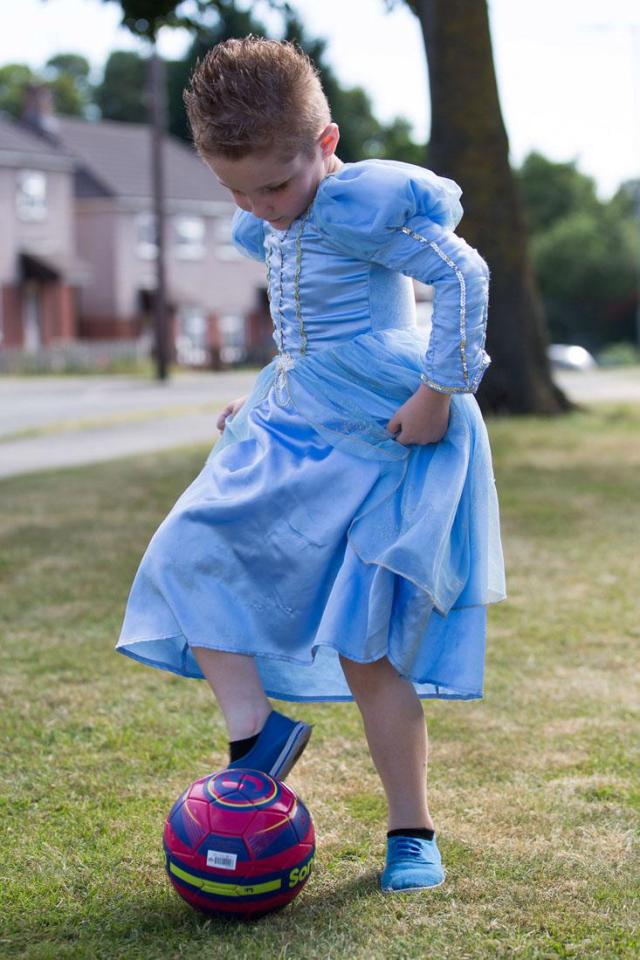
- Boys can like Princess dolls just as much as girls do and girls may prefer the toolset to the baking set and both are just fine. There is no right and wrong about what you choose to play with.

- Superheroes are not always men and Heroines/Princesses are not always helpless. They are certainly not doing the right thing if they just wait around for someone to rescue them from their troubles.  Nothing wrong with asking for help when you can't handle something on your own but that works just as much for boys as girls.

- The Princess and the Pea story? It is a bullshit story that means nothing and shows nothing. Why should a girl be lauded for simply being unable to adjust to circumstances and behaving in the most spoilt way possible? The Frog Prince story? A snobbish girl who goes back on her word and then changes her tune when she realizes the Frog is, in fact, a Prince. Just because a story (or an idea or a custom or cultural practice) is handed down through generations does not make it right.

- It is not okay to make fun of a friend or classmate because their underwear showed or because they forgot to close the bathroom door when they went in to pee, in a hurry (this especially applies to preschoolers). Do ask them WHY they think it is funny when someone has an emergency (which can happen to anyone) and especially if they think it is MORE funny when this happens to a female classmate.

- Haircuts (at that age) are about comfort first, style a far second and being boy or girl not at all. Having short hair does not make a girl a boy and vice versa.

- When grown-ups get married, it is because they want to be together not because it is natural or mandatory for a girl to get married when she reaches a certain age. Also, for a girl to get married DOES not mean she is going out of her own family or suddenly becomes a 'guest' in her own home.

- Cooking. laundry and changing light bulbs are life skills that EVERYONE needs to learn to do on their own. You don't HAVE to learn to cook because you are a girl - you need to because it will help you survive and stay healthy when you start living on your own.  It is about self-reliance, first and foremost.

- Everyone cries when they are hurting. Girls and Boys. Men and Women. There is nothing wrong with saying and expressing how you feel.

-  Nothing - absolutely nothing - can be explained or justified with the words 'because you are a girl' or 'because you are a boy.' (Unless you are discussing bodily changes during puberty.)

It is never too early to start talking to kids - boys as well as girls - about fairness and equality. It is the only way to empower them to speak up when they need to. Whether for themselves or others. 

Monday, 13 August 2018

Some thoughts on the #Keralafloods and #Onam

She cannot take the pressure, they said. Overwhelmed, she is going to destroy everyone and everything around her, they prophesied. The sheer pressure of it all was supposed to rip her apart. And yet, when the inevitable happened, she took it all in, flowing complacently along - not even rising to anticipated levels, slightly more swollen than normal, yes, but not spreading any reign of terror as it was imagined she would. My hero for the moment is the quintessential 'Malayali girl' of the poet's imagination; the 'floral essence of the mountains' - the mighty Periyar!  What an ode to grace under pressure! What a revelation of unknown depths! 

Swollen, muddy and yet calm: The Periyar in Aluva after the opening of shutters of Cheruthoni dam


What a week it has been! Like the rest of the Malayali universe, I too was glued to the news, watching in horrified fascination as mighty swirls of water enveloped a tiny, tiny bridge in a little-heard-of town called Cheruthoni that was suddenly the focus of our existence. We watched six palm trees standing near the bridge topple one by one and the water completely submerge the bridge itself, all the while wondering what would happen when those ferocious waters reached farther down to Ernakulam, the bustling financial capital of the state. And it wasn't just Ernakulam or Idukki. From Kasargode to Thiruvananthapuram, there was untold misery spreading with muddy waters. And as the sun still plays hooky from behind giant walls of clouds, there is a collective sense of relief in the air as everywhere, the water is receding, leaving behind thousands of weary people waiting to pick up the pieces of their lives again. One image that stuck to my mind was of a cooking gas cylinder floating in the rapids before disappearing into a swirl of water. I wondered about the family it belonged to - about the home that fell apart losing bit by bit of its existence to the rising waters...the agony they would have to go through before everything falls in place again. That lone red cylinder represented so much heartbreaking loss! 

Picking up the pieces: Sulekha of Wayanad salvages what she can from the ruins of her home.
Picture Courtesy: https://localnews.manoramaonline.com/wayanad/local-news/2018/08/12/w-special-page-stories-12.html


In the history of the state of Kerala, we have not heard of 24 dams raising their shutters all at the same time. Landslips, mudslides, rivers running amok...every possible disaster that could have happened, happened, spanning the entire length of the state. No district emerged unhurt. Entire homes have disappeared, along with valuable documents and fond memories. Precious lives have been swept away. Roads, bridges in disarray. Entire villages inundated and crops decimated. Pets that will perhaps never be seen again. We have not encountered anything like this in recent memory. There was a time during the last couple of scanty monsoons when I longed for the torrential downpours of our childhood - sighed that our children would never see the beauty of the monsoon as we had. Now I realise one should be careful what one wishes for - what is an idle nostalgic rumination to some of us is a disastrous loss of lives and livelihoods of others! 

One heartening outcome of this entire scenario is a certain pride about the way our Government handled this situation. For once, we felt safe in our leadership; we felt we were in good hands. Information was timely and frequent. Words were matched with actions. As a person whose affiliation to political parties is neutral, I say this with surprised admiration - Pinarayi Vijayan showed himself to be a dependable leader. He showed a kind of leadership that we in India are not only not used to, but don't even think to expect! This Government has set the bar high for the future when it comes to crisis management. Every arm of the administration working in tandem, taking even the Opposition into confidence so that there was less mudslinging and more focus on what was needed to be done. Proud to be a Malayali in present-day Kerala. 

While an entire state was immersed in preparations for impending doom, it was a shameful waste of time and resources when the Police were forced to curtain off views of the rising waters from bridges to prevent self-absorbed maniacs from stalling traffic or worse, getting swept away by the flood waters while they posed for selfies from the railings! That so much effort had to go into saving fools from themselves. both near the dams and the riverbanks is something we really need to introspect about! The simplest thing we can do as individuals is to deprive the depraved of that lusted-after 'like' and perhaps add a comment - #shameonyou! Then there were the alarm mongers and the manufacturers of fake videos and pictures - wasn't the human tragedy playing out all around entertaining enough for you that you had to make it more so with videos of floods in other places from other periods in time, designed to spread ever more panic and pain? Not to mention those who sought to bring in religious bigotry and political one-upmanship into the bargain. Seriously, #shameonyou!

I just read about Hibi Eden MLA canceling the Onam celebrations in his constituency in solidarity with the flood victims. I sincerely hope the State Government will follow suit. And what about us, ordinary folk? Surely we too have an obligation to be part of the process of relief and recovery! 

Every year, for school Onam celebrations, I buy a pair of pattu-pavadas for my daughters - an attire they will wear once to school, a second time on actual Onam day and then never again. This year, why not let them wear the same ones they had last year? So they might have grown a few inches but surely not so dramatically that they can't fit into those pattu-pavadas for one more time (it is only for a few hours in any case). This is the time of year when we all buy those Kasavu Onappudavas that will remain untouched in our cupboards for several years until they are old enough for us to 'give to charity' without any reservations. How about this year we take out last year's finery, give them a good airing and wear them again with pride? How about we get our entire extended families to forgo the tradition of Onam gifting to those among us who really don't need it and channel those resources into the Chief Minister's Relief Fund? So too the funds that go towards Onam feasts and celebrations typically organised by offices, clubs and residents associations and the non-essential shopping we do this season to take advantage of the festive discounts on offer. How about we keep it simple this year, in solidarity with those of our brethren for whom Onam is the farthest thing on their minds right now? Every extra penny will help in putting a smile back on faces left bereft of joy by Nature's fury. 

Dedicated groups of people have done a splendid task of putting together relief material for those still in camps and those who are slowly making their way back home to their shattered homes and broken lives. But as each day passes, the requirement changes. According to Muralee Thummarukudy, Chief of Disaster Risk Reduction in the UN Environment Program, whose posts I keenly follow, money is what is really needed now - to kickstart local economies; to rebuild homes and lives; to return some level of autonomy to those unused to charity. Money is also what the Government needs, to rebuild infrastructure and compensate individuals for the losses suffered. Let us strengthen the hands of our Government so we can all have Onam on our minds once again...perhaps not today, perhaps not this year but sometime in the future when we all have reason to smile again. 

In this eventful year when the Periyar truly revealed the depths of her being to us, can we not open our hearts and minds and celebrate Onam in the true spirit of community and fraternity that it originally stood for? 


Wednesday, 28 February 2018

Eyes up here, please

I used to be an avid watcher of that old-time (wow! Doesn't it seem truly old-time now?!) sitcom - F.R.I.E.N.D.S. In one episode, Joey asks the girls - 'how do women manage to get anything done? I mean, they are right there!' He was referring of course, to breasts.

This morning, I happened to see the cover of a women's magazine that my mother subscribes to (yes, I am specifying that it is my mother's magazine, not mine) and was quite taken aback. It showed an elegant woman, beautifully attired in a saree, hair cascading carelessly down her shoulders as a baby blissfully lay in her arm, suckling at her bare breast. It is a revolutionary image for Malayalam media - bold, beautiful and arresting. The headline in bold exhorted men to look away and leave women to breastfeed their babies in peace. It was all quite riveting. Until I glanced into the magazine and saw an interview with the cover model. The only words I read were the highlights given in bold: I am not a mother. I am not even married. I felt sick to the core of my stomach. So a magazine that is encouraging women to forget about being stared at as they feed their babies the nutrition that Nature has provided for them could not find a single mother who could model for their cover? If there is no young mother in Kerala who wants to make a point by openly breastfeeding her baby - as legislators have been seen doing in Parliaments in Australia, Brazil and Iceland while simultaneously going about the business of running their countries - what was the point of this feature? Who exactly was the magazine fighting for? 

Brazilian Parliamentarian Manuela D'Avila breastfeeds her child as she raises a point in the National Assembly


Curiously enough, the starting point of their discussion - a mother whose picture of her feeding her baby without covering up was posted on Facebook by her husband - was right there in the inner pages. A genuine mother who genuinely believed in the cause. Stood for it. Campaigned for it. She was not enough to grace the cover? So what really was the genuineness of this cover picture and the loud message below it? Excuse me, Grihalakshmi, but in my mind, you have just lost all credibility and all good intention with this. You grabbed eyeballs. You almost made a point. And then you screwed it up. Because that point at which you decided to push a real mother actually breastfeeding her child into the inner pages and portray a model holding a baby to her bare breast on your cover is where you delved into cheap sensationalism and exploitation. It was doing what advertisers have been doing for decades - grabbing attention by displaying a woman's breast. In a society that does not consider even a breastfeeding mother exempt from unwelcome glances, you blatantly sexualised a mother's breast for publicity.

If I had to answer that question that Joey asked his friends, this is what I would have to say: women are not as concerned about their breasts as men are. We do not carry the burden of life and death in our bras. We do not bear upon our chests any answers to the questions that plague the Universe. We do not think about our breasts as often you do; our fascination with them is not as compelling as it is in your minds and in popular culture. 

The thick paper folder held close to the chest during college days; that dupatta tightly pinned to the kurta on both shoulders; that holding of the palm to the neckline while bending low to pick something off the floor; that constant tugging at the shoulder to ensure your neckline is not going too low and the bra straps are not showing - it is all stuff we are conditioned to do from a young age by our mothers who want to protect us from unwanted attention and worse. Left on our own, I don't think we would ever pay that much attention to them. As a first time mother, there were many challenges, I faced - but the one time I really lost it perhaps was when I was - in all good intentions - reminded to pull up my neckline as I struggled to hold a baby in one arm and a bulging baby bag in the other. See, at that point, the last thing that bothered me was that my cleavage was showing and some insignificant-excuse-for-a-human-being would leer and therefore had to be shielded from the sight of them. Plunging neckline? If you have a problem with it, deal with it, morons! 

I remember seeing a forward on Facebook once - it showed the picture of a girl holding her palm to her kurta's neck as she bent forward to offer coins to a temple offerings box. The caption (in Malayalam) read,"When a girl does this, she upholds the honour of her father, her brothers and her husband." I wanted to throw up, Quite literally. What made it worse was that this skin-crawlingly-cringe-worthy post appeared on my timeline because it had been shared - by a girl! I can only pity the virtuous soul who believes the honour of the men in her family resides in her bosom and the thousands of men who had 'liked' this picture, agreeing likewise (while considering any woman who is not your mother or sister as fair game).

Every woman has a sense of pride in her body. As much as she makes her face look pretty in a manner she believes makes her look her best, so too she dresses her body in a manner that she believes makes her look her best. That is her privilege. And only hers. How much that measures up to anyone else's values/expectations/morals is their problem and theirs alone. No kingdom comes crumbling down at the sight of an exposed bra strap and no mighty God falls at the sight of an exposed cleavage. Time to move the sights up, guys. Morally, physically, attitudinally. 

I remember once in my old workplace, one of my young teammates,  was making vain attempts to pull up what was a structurally gravity-prone neckline. She was obviously self-conscious and distracted until finally, one of her male teammates laughed and said, 'forget it, will you? There is nothing there we haven't already been seeing for the past five years.' I was shocked for an instant (I am still old-school, ok?) until the girl herself laughed and gave up struggling to adjust that truant neckline. We all got back to the business at hand. Which had nothing to do with anyone's cleavage. The point is, life is not always about what lies beneath one's clothes. Sexuality is a private part of your existence that you choose what to do with. And when. And with whom. In every other context - whether a woman is breastfeeding, going about her business, going to school or college, going to a temple or sweeping the courtyard - there is nothing sexual about her or her breasts. At least to her. So leave it at that. And let the breasts be. 

Thursday, 14 September 2017

I make the best idlis in the world. But...

To anyone who knows me this heading would have seemed completely out of character. For one I don't cook. And certainly not well enough to boast about being particularly good at it. So why did I just make that tall claim? It was a certificate given to me by my 8-year-old this morning. Maybe because it was the first time I have ever personally made her favorite breakfast for her and she wanted to encourage me to keep it going. My reliable domestic help of many years quit after her children assured her she need not work for a living anymore. We are currently in the gap period between her leaving and finding a replacement for her. Out of necessity, I have now donned the cape of Cook, which I wear awkwardly and fully intend to bury once I have a new 'Chechi' who will make idlis for my children (even if they are not 'the best in the world').


My mother is in that league of mothers whose cooking everyone always lauded and talked of with great fondness (her physical condition does not allow her to cook much anymore). Neither of her daughters cook. And I don't mean can't. I mean don't. Choice. Of the conscious variety. Early in life, my sister and I realised we didn't particularly enjoy sweating it out in the kitchen - or the fact that whatever else we may do with our lives, we would still be judged on the tang of our Sambar or the shape of our chapathis. What do we normally do in households when a job turns up that we don't know how to do or prefer not to do by ourselves? Like plumbing. Or a blown fuse. Or gardening. We hire someone who knows how to do the job and pay them for it. That has pretty much been our policy on food from the time we became independent adults. We entrust the cooking to someone who knows how to do it and chose to do it to make a living. (I realise there are many interjections I need to make here - like the fact that everyone who chooses to make a living by cooking for others may not be doing it by choice either. They are putting a skill set to work and I respect that.) When I got married, in the initial days I thought I needed to fit into the definition of a 'good wife' and cook three meals for my husband every day. I tried. Neither my interest nor my patience lasted for long and my husband told me he would rather see me do the things I was skilled at or enjoyed doing rather than be tied up in the kitchen, trying to dish out meal after meal. In retrospect, I realise if things had not worked out that way at that point in time, I would have ended up a bitter and unhappy woman who resented her family for reducing her to "person-who-puts-food-on-the-table" over and above anything else I did with my life.

I have never quite understood this equation of women and cooking. When I joined the radio station I worked in for 7 years, one of my first assignments was to critique their popular celebrity interview segment. That particular week they featured two popular female singers who were to be married soon. To both of them, the interviewer put that most crucial question: So how are the cooking lessons going? Like it was a given that henceforth their lives were going to be all about feeding the men who were being so kind as to take charge of their lives. I raised the point in my report: why was it so crucial to know whether two successful independent women who made a mark with their singing could cook well enough to please their husbands?' A very incredulous RJ asked me, 'what is wrong with that? Isn't that what people want to know?' Years later, a prominent newspaper carried a story on newly elected women mayors after the local body elections. Every single profile of these women who were going to be the first citizens of their towns focussed on what they had cooked for breakfast that morning and how they intended to 'manage home and work at the same time' once they assumed office. I made a call to a sub editor I was acquainted with and told him I found it offensive that they had narrowed those women down to their kitchens on the day they had just been entrusted by the people of their town with the charge of running the town! He incredulously asked me, 'what is so offensive about that? That is what people want to know.' Really? Even before we know their views on the state of the roads and the garbage piling up all over? Does it validate our choice of Mayor to know that they are going to cook for their families first and foremost before they go about doing anything else? After the previous election, when a male mayor had assumed charge I don't remember reading about how he intended to balance his work and home or whether he would continue to stand in line to pay the electricity bill for his household henceforth (keeping with the gendered character of roles in households in general.) PS: this was before everyone started paying all their bills online ☺

A couple of years ago, my husband was featured in a magazine in an article on flat-life in Kochi. In addition to the standard questions on aspects of convenience and facilities and his ideas on decor was an innocuous looking question at the very end: which part of the apartment is best described as 'the' family space? The answer was this: 'The kitchen. When my wife is in the kitchen, cooking, we all tend to converge there to spend time together.' There was just a simple problem with this question. It was never actually asked or answered. I am guessing the interviewer, when writing his final draft, figured he should have included something in the family angle and threw in what he thought was a typical question to which there was only one typical answer. Except nothing could be less true in our household. We have never considered 'converging in the kitchen as my wife cooks' to be the definition of fun family times.

Now let me stress here that I am not in any way denigrating the art or the daily necessity of cooking or looking down on those who happily, willingly, do it three times a day, every day. I just have an issue with it being this gendered responsibility that is pushed down women's throats like that (along with procreation) is one of the reasons for their existing. Or the conception that marriage entails a man getting a free cook and housekeeper for life. Food is a basic necessity. Cooking is a life skill that any human being, male or female, should master, to the extent of being able to brew their own cup of coffee or tea in the mornings and a couple of life saving mini-meals like an omelette or 2 minute noodles (or whatever falls in your definition of survival food or a no-frills staving-off-hunger quick fix). Anything beyond that is - should be - based on individual choice and capabilities. Like music or dance lessons beyond the mandatory minimum that is taught in primary school. It is not a male/female thing. It is a human thing.

Everyone thinks their mother is the best cook in the world. My mother (and I think pretty much all mothers in the world would have said variations of this to their children) used to say it is because mothers mix love into the food they cook. I never wanted to be that mother. I mix my love into the time I take to read to my children, take them wherever they need to go, talk to them, tickle them, listen to them or in general be with them. Because there isn't just one kind of mother - the mother who makes the best idlis in the world. I am not her. Have never aspired to be her. Do not wish my daughters to grow up thinking they need to be her. 

Sunday, 9 July 2017

Kadheen Chhe, Bhutan

I am not an avid traveller. I never expected a travel blog to be part of my repertoire. In fact, this is not a travel blog. But yes, it does involve travel. To one of the most magical places on Earth. Bhutan. The only item I had on my bucket list thus far.

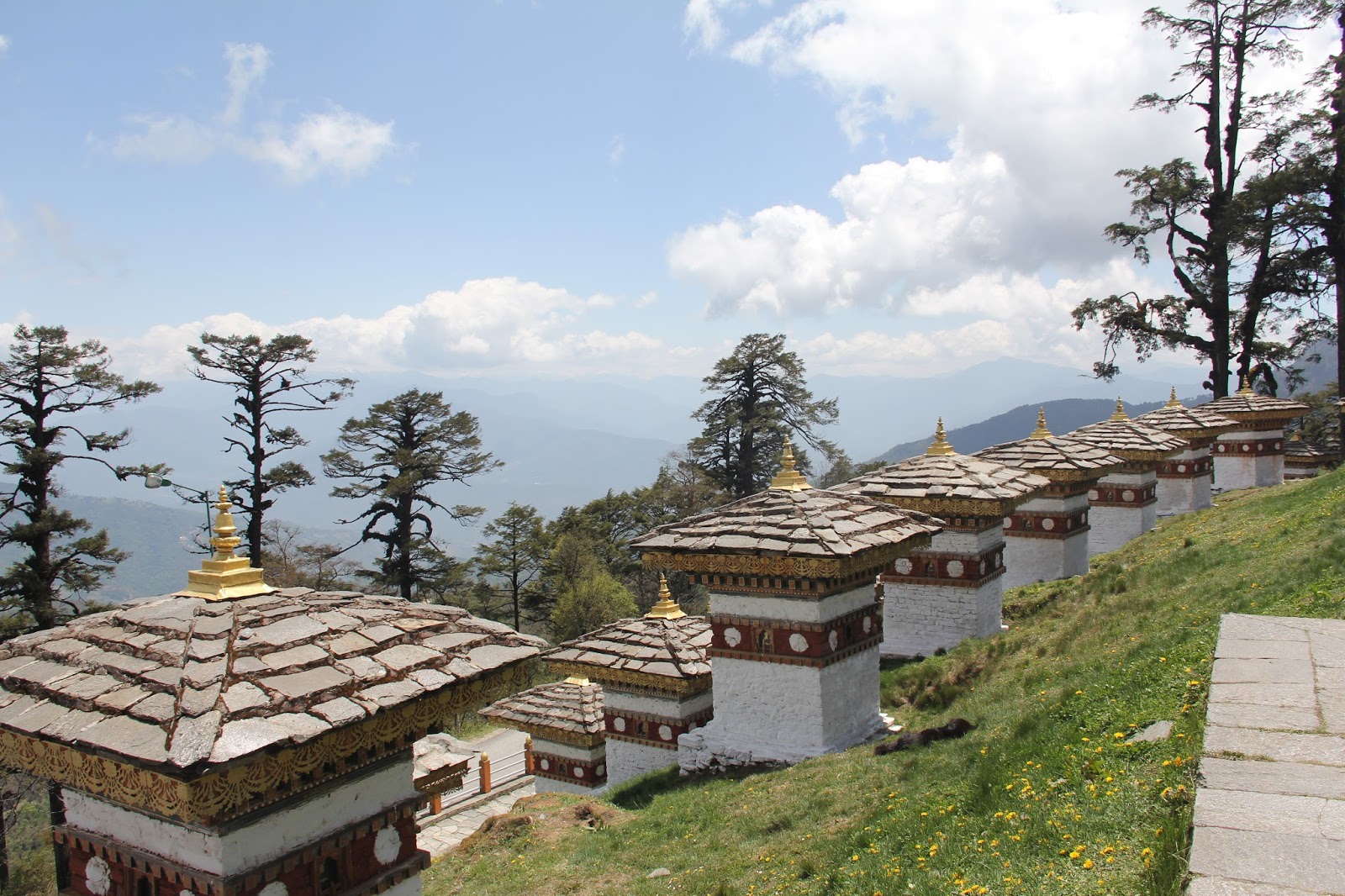
A view of the 'Chortens' (Stupas) at Dochu La Pass
It's two months today since my fellow travellers and I descended back to the reality of everyday life after our 11-day sojourn of Bhutan. I can't believe it took my this long to get this blog out. It should have been so easy considering I was writing it in my head from about 9 months ago when we first started planning for it - our trip of a lifetime. I could have so easily put together a few pictures that - however inadequately - frame the natural beauty of the country and added a few glowing descriptions before the sun set on our return. And yet this was an experience that would not be so easily condensed. That is why I have written it and rewritten it over the past 8 weeks and each time been dissatisfied with the result. If I close my eyes and concentrate I can still feel the crispness of the Himalayan air on my skin and the distant sound of prayer flags fluttering in the wind. In two months I have come to realise that that is what Bhutan has really done for me - given me a taste of what tranquillity means. Given me a lifelong pass to escape into a moment that will forever be associated with peace and the purest joy that comes from deep within. Kadheen Che, Bhutan.

If you google the phrase 'Kadheen Chhe' you would probably not get any results. The official phrase for 'Thank You' in Bhutanese according to the Internet is 'Kadrin Che' but that was not the way Ringzin said it. Ringzin, our designated driver, in his dignified black 'Gho' and gel-slicked hair, spoke very little in the first few days of our travel. Then he heard us ask Sonam, our eager-beaver guide how to say thank you in Bhutanese and was not satisfied with the way Sonam answered our query. So he took it upon himself to teach us that one phrase. Every time he held the door open for us (which, charmingly, was every time we needed to get out of his sturdy car which proudly proclaimed 'Ring's' in white on the front glass) he would enunciate the phrase 'Kadheen Chhe' till we learnt to say it to his satisfaction and in place of our mechanical 'thank you's. Kadheen Chhe for that Ringzin. Ringzin and Sonam, our companions from the moment we were picked up at the airport to the moment we waved goodbye were so much a part of our experience of Bhutan that it would seem incomplete to write about that trip without mentioning them!

Bhutan was my first experience of the Himalayas. It was my first time away with girlfriends. It was the first time I ventured out of my comfort zone to try my hand at experiences like trekking, camping and river rafting. It was the first time I was leaving behind my two children for something as non-mandatory as a vacation. It was in many ways a milestone then. A journey that was much more than travelling from Point A to Point B - a 'journey' in the infinite meanings of that term which is what made it different from all the 'trips' I have been on so far and which made me feel this was something to write about. Bhutan was a dream I had nurtured in my heart for a really long time but in that corner of my dreams reserved for those I thought would never materialise. I hadn't read a lot about it. I hadn't seen a lot of pictures or documentaries on it. So I am really unable to say why and how this dream took root in my psyche. Like it was an important marker in my life that I needed to cross at some point. Like it was just meant to be. But how do I start this story?

The natural starting point, of course, is that morning I impulsively messaged P and S with this query: I have at different times spoken to both of you about going on a trip to Bhutan. So here is my question: would you be open to getting introduced to each other and thinking about whether all of three of us could plan the trip together? Suffice to say that within a few minutes, we had a Whatsapp group 'Mission Bhutan 2017' up and running, complete with a DP of that most iconic of Bhutanese images - Tiger's Nest Monastery, precariously poised on the ridges of a sheer, black cliff. This was to be our motif for longing, aspiration and dreams coming true in the days ahead. In a couple of days, we sat around a table and had our first cup of coffee together and dedicated ourselves to the task of travelling to the Land of the Thunder Dragon, sometime during the next school summer vacation which was eight months away. P and S have been friends from different facets of my life, both younger than me but closer in age to each other, so I found they easily vibed and in fact, hit it off so well that there were aspects of the trip when they were probably happier to have each other than just me for company.  I think the real starting point of this trip was the eagerness, shared in equal degree by the three of us, to not just visit an exotic destination but to be subject to the experience that the country that prides itself on its happiness quotient, has to offer. The intent. The desire. The motivation. Kadheen Che, P and S, for sharing, supporting and fully living my dream!

It was the on the morning of 29th April that we boarded the flight from Kolkata to Paro - the land of our dreams. As the flight took wing into mountains of clouds, we were acutely aware of the fact that any minute now we would have our first glimpse of the Himalayas. We did not have the good fortune to be seated on the left side - from where you get the best views. But even so, we were awed into silence as the mighty mountains of innumerable legends loomed on the horizon - as distant, as majestic, as perfect as you have always imagined. I felt the prick of tears in my eyes as I saw a perfect snow-capped peak rising taller than the others in that expansive range. It may have been the Kanchenjunga (which the pilot had announced we would get to see on the flight) but I can't be sure. It was the Himalayas and that was enough for me. It was an overwhelming moment - one that makes you feel like everything else in your life was simply leading you towards this day and this moment. Your first sighting of the Himalayas is no mean moment. It is a momentous occasion - like the day you get married. Or have your first child. To our right, there was nothing but walls of impenetrable white clouds and on the left, the spiny, black ridges with that one perfect snow cone in the horizon. Soon, too soon, the ranges disappeared from view and we were flying among the smaller mountains - so close that you could almost press your nose up against them! And before we knew it, we had landed on the tiny airstrip snuggled into a flat surface among tall hills - Paro airport. As we descended from the aircraft we could see that no one was hurrying towards the terminal to clear immigration or claim their baggage. Everyone was looking around in awe at the surrounding hills, hastily trying to imprint every moment on their phones or cameras and filling their hearts and lungs with every ounce of goodness in the Bhutanese air.

The greatest favour I did myself in the planning of this trip was that I had not saturated my mind with pictures of Bhutan. I was therefore happily surprised and wonder struck by everything! The country has a strict policy on architecture - everything, from hotels to monasteries and even the airport - are built in the ancient architectural style of Bhutan. So there is a visual symmetry to the country that is quite stunning! Whitewashed exteriors with intricately carved window frames, rimmed with red and black on which are golden paintings depicting the legends associated with Buddhism. No buildings are allowed to have over six stories so there is nothing that disrupts your view of the ubiquitous mountains and nothing that distracts from the sheer bounty of Nature that the country wraps itself in. The expansive, uninterrupted skies are a whole new experience, especially for us, hailing from the second most populated country on Earth and one of the most population-dense states therein. I did not want to take my eyes off the mountains for an instant if I could help it! Everything else - the ancient temples, the stately Dzongs (administrative headquarters) and Lhakhangs (temples/monasteries), the gigantic Buddha that rules the Thimphu skyline - all of it pales before the sheer blue of the sky and looming black of the mountains. From the airport in Paro, we were driven straight to the capital city of Thimphu. We would cover Paro - which is home to the Tiger's Nest monastery - in greater detail in the last few days of our trip.

If you ever get a chance to visit Bhutan but have only two days to spend there, I would strongly suggest you spend those two days in Thimphu. It is everything Bhutan has to offer, in a comfortable nutshell. There is the gigantic Buddha I mentioned before. There is the hike to the ancient Tango Monastery that offers a chiselled down version of the far more strenuous trek to Tiger's Nest. It has breathtaking views of the mountains around, lush green mountain vegetation, unexpected animal sightings, dramatic blooms and a monastery that makes you feel like you have just stepped into a long vanished past. It also has adorable dogs that accompany you on the trek for just a pat or two, taking away some of the tedium of being breathless and just a tad dizzy from the thin mountain air. On our trek, we were also fortunate to come upon a bunch of adorable puppies who were happy to be fussed over and carried around.

A dramatic view from the trail up to Tango Monastery


Takin - the national animal of Bhutan
Not to be missed in Thimphu is also the Takin reserve - the only enclosure in all of Bhutan where an animal is held in captivity. As Sonam explained, Bhutan being a strongly Buddhist community, the idea of a zoo is anathema but the Takin reserve is the sole exception for the simple reason that the Takin - a unique creature that looks like it is half-goat and half-cow - is the national animal with mythic origins and the only way for a visitor to have a view of one is to have a few in an enclosure. The reserve is pretty small and there are only a handful of Takin that you get to see but it is a worthwhile trip for a glimpse of the unique animal.


The Thimphu Dzong
The impressive Thimphu Dzong houses the offices of the King as well as the topmost officials of the administration. The Dzongs are part offices and part monastery housing the monks who head monastic affairs, just as Zhabdrung, the founder of the modern Kingdom of Bhutan envisaged it. What he did not lay down, but which makes Bhutan the last Shangri-La on Earth are certain principles the govern the deeply Buddhist country - they are the only carbon-negative nation on Earth and their constitution decrees that 70% of the country is to remain forested for eternity. No development may be planned which transgresses this basic principle. Which is why the air we breathe and the food we eat in Bhutan is probably of a quality that you don't find anywhere else on the planet right now. The two greatest industries in Bhutan are hydropower and tourism, both done with the greatest care to retain ecological balance as far as possible.

Having the luxury of 11 days before us, we probably spent more time in Thimphu than an average tourist would and so got the chance to experience the charms of the very simple but very cosmopolitan city. There are cafes with excellent pastries and coffee. We spent a few hours in a public square with very few people but with an outburst of overhanging yellow flowers and the whirr of prayer wheels. You could just sit there with a coffee and a book and be willingly suspended from all reality of everyday life! Our visit was in the beginning of the Monsoon in Bhutan but we were fortunate to have sunny skies and pleasant weather most days. Nights tend to get a bit chillier than the average South Indian is used to but Thimphu was also the best of our stops, weather wise. The day we arrived the mountains in the distance were dark and plain. The next morning there was a smattering of powdery snow on them. The changing vistas were as magical as you could imagine! There are a good number of pubs as well and on our night out with our hosts (the owners of the travel agency through which we booked our trip who happen to be friends of a good friend) we saw people let their hair down and have a good time to the music of young, local bands. We were quite charmed when our hosts opted to take a longer route than follow a stately black car which they told us belonged to the Queen who was probably out on a night time drive with her infant son. The Bhutanese practically worship their young King and Queen whose pictures greet you from every shop front and every public square and it was with the affection bestowed on a beloved family member that they decided to let the Queen and the little Prince have their privacy on the lonely highway. All too soon it was time to leave the cosy confines of Thimphu and move on to the whimsical valley of Punakha where the jacarandas bloomed and the glacial waters of the gentle River Mo Chhu beckoned us to step into its playful, icy waters.

The Stately Punakha Dzong
Punakha offered new images to soothe our mountain-addled brains. There were vast fields and ridges being readied for cultivation. The trek to the Temple of Fertility was more flat ground than we had seen so far in Bhutan. This quaint little temple with a wooden penis as its motif challenged and provoked Bhutanese morality at one point in history but now the penis is happily etched on walls and fences and penis shaped keychains and other collectibles are widely seen in all souvenir shops. The Punakha Dzong on the banks of the Mo Chhu is almost like a whole other world. While we were inside, preparations were on for a festival the next day and monks were busily decorating the rooftops with colourful cloth streamers. At one point a music started to play - I can't name the instruments and I can't describe the sound. Let's just say every person within the monastery stood transfixed as that haunting music whose source we could not see played as a background to the arrival of some high priest. It stopped as abruptly as it began but it took several moments for everyone to get back to whatever they were doing. P and S were busily trying to download that music back in our hotel room that night - it was that rivetting! But I doubt if it would have the same effect playing out over earphones as it would standing in a 17th century Buddhist Dzong, with monks milling around and prayer flags and cloth streamers fluttering in the wind. Bhutan to me has it own sound signature - you hear it everywhere - wherever you are in, in varying degrees. The population is too small and the country too overwhelmed by the hills and the winds for us to hear any of the din we are familiar with - human voices, traffic et al. In Bhutan the wind is the dominant force. And as human kind's tiny attempt to harness those unbridled forces of nature, everywhere you look you see prayer flags. Then there are the prayer wheels - at the end of each rotation, a pole on top of the wheel strikes a tiny little bell to indicate that it has completed a turn. The rhythmic striking of the bells, the flutter of the flags and the roar of the wind is Bhutan in a sound clip. It is what happiness sounds like.


On the trek to Khumsum Yulley Namgyal Chorten
Our third trek was again in Punakha - this one to a tranquil temple built in modern times atop a hill. The trek was through some dramatic landscapes and this one in addition to our treks to Tango and the Temple of Fertility truly prepared us for what was to be the highlight of the trip - the trek to Tatkshang - Tiger's Nest monastery. But that was to be only on the last day of the trip. Khamsum Yulley Namgyal Chorten offered some fantastic photo opportunities from atop the temple - there were snow capped peaks to one side and the river flowing through the valley on the other. After the trek we went rafting down the Mo-Chhu. For someone as inexperienced with anything to do with water as me, the Mo-Chhu was a comforting first time. The water was mostly gentle and knee deep - you could see the rrock-strewn bottom through the crystal clear waters - and there were only a few gentle rapids on the one and a half hour trip. Sonam told us once the summer started and the glaciers started melting there would be far more water and far more rapids than what we saw. For the more experienced and adventurous rafters, there is the 'male' river - the Pho-Chhu - which would join the Mo-Chhu before flowing as one before the magnificent Punakha Dzong. That night we camped on the banks of the Mo-Chhu just a short distance from the Dzong. It was a cloudy night with a light drizzle so my dream of counting the stars on a bright night by the riverside was not quite realised. But I can't complain, really There was so just so much magic on offer that one cloudy night could not cast a shadow on the grand spectacle that Bhutan laid out before us!

The one night in Bhutan that we did not really cherish was the one in Gangtey. A five-hour drive along treacherous mountain roads still under construction was a deviation from our otherwise idyllic sojourns. The area itself was a Swiss-village-like setting high up in the mountains but by the time we got there we were so tired that the cold, wet, misty and depressing landscape did nothing to brighten our spirits. Bang opposite the modest lodgings we were put up at was an ancient monastery. This one was slightly different from the temples and monasteries we had seen on our trip so far. It houses stockpiles of weapons from ancient marauding/war/hunting days. It had the dankness of an unpleasant history swirling within its dark and gloomy interiors. The icing on the cake was when our guide pointed out a life-size effigy and claimed it was the actual mortal remains of a witch killed by one of the high priests of the temple centuries ago. In our cold hotel rooms that night, seemingly cut off from civilisation and surrounded by foggy mountains and a corpse, we found it difficult to sleep. Adding to the misery was our fear that the power would go off and not return. The huge candles in the rooms were our first indication that this was a place where power cuts were a regular occurrence. Around 7.30 pm there was a knock on my door and a pale and unsmiling face at the door said: Please come for dinner. 'But it's too early for dinner,' I protested, ' we would like to eat by 8.30 if that is ok with you.' 'Power go. No surety. Please have dinner now' the face said without a flicker of expression. In my mind, this visual has the lady holding up a flickering candle that throws a ghostly glimmer on to her face. I know this can't be true because in fact the power stayed put during our stay and there was no need to light a candle. But somehow the picture seems more apt with the candles and the shadows. I wearily informed P and S that we needed to head down for an early dinner. That night the three of us talked late into the night, huddled up in one room until we realised we were all a bit spooked by the whole thing and were somehow reluctant to go back to our own rooms. The realisation made us laugh and finally, we decided to call it a night. Sonam said we needed to leave by 7 in the morning. We asked him to make it 6.30. Morning dawned on a pristine valley full of rhododendrons and thin veils of mist. As we drove away from Gangtey we realised that the reason this place was on our itinerary was that it was so stunningly beautiful. We stopped for a few pictures of the rhododendrons and a yak we spotted on a hill. Maybe it was the weather. Maybe it was the sheer length of the drive or the fact that it was colder than we had experienced in Bhutan thus far. Gangtey left us with a bitter taste in our mouths that place itself does not deserve at all! Maybe another time, another day would have made quite a different impression.

A view of the Jomolhari Peak from Chele La Pass
After Gangtey we went back to Paro for the final leg of our trip. Paro offered two of the most unforgettable destinations - Chele La Pass and Tiger's Nest. Chele La offers the most stunning views of the Himalayas that you get to see in Bhutan. You see the glimmering snow capped Jomolhari - the tallest peak situated within Bhutan along with a few others among the 8000+ meter peaks of the Himalayas. The day we went, the skies were a stunning blue and the sunlight danced off the distant row of peaks. Chele La is the highest motorable road in all of Bhutan. The winds tend to be really chilly. Get yourself a cup of tea from the roadside stall and take a few minutes to wander off by yourself. Standing there among the tall white flags fluttering in the wind, watching the endless Himalayan peaks on the horizon is the closest I have experienced to a Zen moment. It is the nearest I have come to meditation. You don't need to consciously purge yourself of thoughts. It is a moment where the silence that fills you on the inside holds all the words you will ever need. The vastness of the Universe and your place in it all. The skies. The mountains. And tiny, tiny you.


Taktsang or Tiger's Nest Monastery in Paro
In preparing for our trip to Bhutan, the biggest hurdle in my mind was the trek to Tiger's Nest Monastery. This was the image that represented Bhutan to me. So there was no question of not attempting it. And yet, everything I had read about that particular trek was intimidating, especially to someone so unused to physical activity in all my living life. I have never played a sport or run a mile. My only advantage was that I had always enjoyed walking long distances. I was travelling with two women much younger and fitter than me and it was a personal challenge to not let my fitness levels be a stumbling block or even a speed breaker for my fellow companions. I set a challenge for myself - I would lose 4 kilos off my excess weight and be perfectly fit for this climb. I have never worked so hard and so systematically on something since I crossed the age for competitive exams. I started walking in the mornings, gradually increasing my capacity from 2 kilometres in half in hour to 6 kilometres in 45 minutes. I downloaded a health app and started tracking my calories. I learned to increase my intake of protein and fibre and cut down on the carbs and fats. I started attending an aerobics class. This was from about 4 months before our trip. When the day of our trip dawned, the weighing scale showed only a loss of two kilos but my body told me a different story. I felt more energetic than I had in a really long time. I was ready.

The trek to Tiger's Nest had specifically been pencilled in for the last day of our trip, knowing we would probably not have the energy for anything more after that. We set out nice and early. From the starting point, the monastery high up in the hills looked almost impossible to reach. It was a chilly day and I was wearing a jacket. In about five minutes the jacket came off - such was the heat of the effort. We encountered several people who had given up half way. We saw some go up on horseback - which you can do only until what is generally considered a half way point but which from our experience is more like one third of the way - the only cafe on the route. We sat at the cafe and looked up at the gleaming cliff ahead of us. No way we were turning back! We stuck to it and steamrolled our way ahead. Past the boulders and mud trails. Past the impossible inclines and the few blessed stretches of flat ground. Past the seemingly unending flight of stairs at the very end of the trail. Past the ice cold waterfall just before the entrance to the monastery. And up the final flight of stairs into the very chamber where Guru Padmasambhava flew in to meditate atop his tigress consort. As we breathed in the trapped air from medieval days in a chamber hewn out of the black rocks, we stopped for an instant to contemplate on what this trip had meant to each of us. S chose to seat herself in one of the many meditation chambers for a while. P and I sat on a stone bench outside the temple, looking at the mountains around us and the valley below in absolute, companionable silence. We had done it. Climbed up Tiger's Nest. And our sojourn of Bhutan was at its glorious end. We did not feel the ache in our limbs or the hunger in our stomachs as we descended from our 8 hour trek (not everyone takes 8 hours - we just decided to take our own time with the climb as well as within the temple). As we sat together with Sonam and Ringzin for a final cup of coffee together at a Paro cafe, we knew we had seen as much as our eyes could take in and experienced as much as our souls could assimilate. We had truly, truly tasted the happiness that Bhutan represents for one and all.

For a woman with two small children aged 8 and 3 to up and leave for 12 days is not an easy task. For a woman to want to break free from it all and just immerse herself in the pursuit of her own little piece of the sky is a dream that all women nurture, I discovered on my return. All it took was a picture or two on Facebook for several of my women friends to reach out and say (1) how much they envied me for being able to take that step (2) how much they would have liked to do the same and (3) to be sure to let them know if I ever planned on such a trip again. So let me first answer that question that several people had on their minds when they heard about this - how did the kids manage? The answer is: remarkably well. For two kids whose days start with a good morning kiss from their mother and end with cuddling to sleep with her, yes, sure, they missed me. But they did not break down. Did not feel betrayed/abandoned/unhappy. They adjusted to getting their morning kisses from their dad and cuddling to sleep with their grandmother (which they often do when I am home as well). Yes, I was lucky to have a supportive husband and mother and a well-established support system in place when I embarked on this trip. But I think the important thing is to allow yourself to believe that the children are not going to be damaged by your absence. Just as they learn to adapt when you travel on work or other emergencies, just as they learn to adapt to their father's absences for work, they will also adapt to this and there will be no lasting effects on their emotional makeup. As long as they know for a fact that you are coming back and will continue to love them just as much as you always did. Did I miss them? Of course, to the point that my eyes misted over when I witnessed a surprise birthday party for a little girl on holiday with her family at breakfast in the hotel one day. But did it cloud my experience of enjoying the trip I had wanted for so long? Judge me if you will, but the answer is not at all. So Kadheen Che, my beautiful children and my understanding family for letting me be. Oh, and in case you are wondering, the promise of gifts works beautifully on keeping the children happy in your absence.

So at the end of the day, what did travelling to Bhutan really leave me with, other than an enviable treasure trove of memories of glorious landscapes? It reinforced the belief that I am in control of my own time and aspirations. It gave me an uncluttered space within my mind where I can escape to, wherein I hold the bliss of a Bhutanese mountainside trapped for eternity. And most importantly, it told me I can still challenge myself, push myself to go beyond my self-styled limitations and feel the rush of achieving something I have worked hard for.

Bhutan to me will always be what Serenity looks, feels and sounds like. It has the emerald texture of a tiny pristine landscape sandwiched between the mountains. It feels like the icy touch of a drop of dew on a misty morning. And it sounds like Himalayan winds rustling prayer flags with the rhythmic sounding of bells from prayer wheels.